The key to adding significant property value on a tight budget is not expensive kitchen overhauls, but mastering ‘renovation arbitrage’—strategic, low-cost moves that generate a disproportionately high return on investment.
- Focus on ‘paper value’ like planning permission and ‘unsexy’ upgrades that eliminate buyer negotiation points before they arise.
- Exploit specific market inefficiencies, such as adding an en-suite for a fraction of the value it adds, to force appreciation.
Recommendation: Stop thinking like a homeowner and start thinking like a developer. Analyse your property for its financial leverage points, not just its aesthetic appeal.
Every homeowner wants to maximise their property’s value, especially when preparing to sell or remortgage. The common advice is often a predictable list of expensive, disruptive projects: a new kitchen, a bathroom overhaul, or a loft conversion. While these can add value, they frequently cost tens ofthousands of pounds, completely shattering the goal of achieving a high return on a modest investment. The real question for a savvy owner is not « what can I renovate? », but « where can I invest a small amount of capital for the largest possible financial uplift? ».
The answer lies in adopting the mindset of a property developer. This isn’t about grand designs or following fleeting interior trends. It’s about a cold, hard focus on ROI. It’s about understanding the difference between spending money and investing it. This means identifying specific, targeted interventions that create ‘forced appreciation’—manufacturing equity through clever work, rather than passively waiting for the market to rise. It’s about knowing which £1,000 investment a surveyor will value at £5,000, and which £5,000 investment they will completely ignore.
This practical guide moves beyond the generic advice. We will dissect the high-leverage strategies that developers use to add significant value for minimal outlay. We’ll explore the power of ‘paper value’, the financial impact of energy efficiency, and the critical ‘unsexy’ upgrades that secure a sale at the asking price. Forget expensive overhauls; this is a lesson in renovation arbitrage.
To navigate these financially critical decisions, this article breaks down the key strategies that deliver the highest return on investment. Discover how to identify and execute value-adding projects that cost less than £5,000 but can add four times that amount to your property’s valuation.
Summary: A Developer’s Playbook for Maximising Home Equity on a Budget
- The Front Door ROI: Why Painting and Weeding Adds Instant Value?
- Gaining Planning Permission Without Building: Is It Worth the Paperwork Cost?
- Does Improving Your EPC Rating from D to C Increase Resale Value?
- Splitting Rooms: When Does Turning a 2-Bed into a 3-Bed Decrease Value?
- The 80-Year Trap: Why Extending a Short Lease Instantly Doubles Saleability?
- Visualizing Value: How to Identify if a Property Can Accommodate an Extension?
- Forced Appreciation: Which Renovation Adds More Equity Than It Costs?
- Which Renovation Mistakes Kill Your Resale Value Instantly?
The Front Door ROI: Why Painting and Weeding Adds Instant Value?
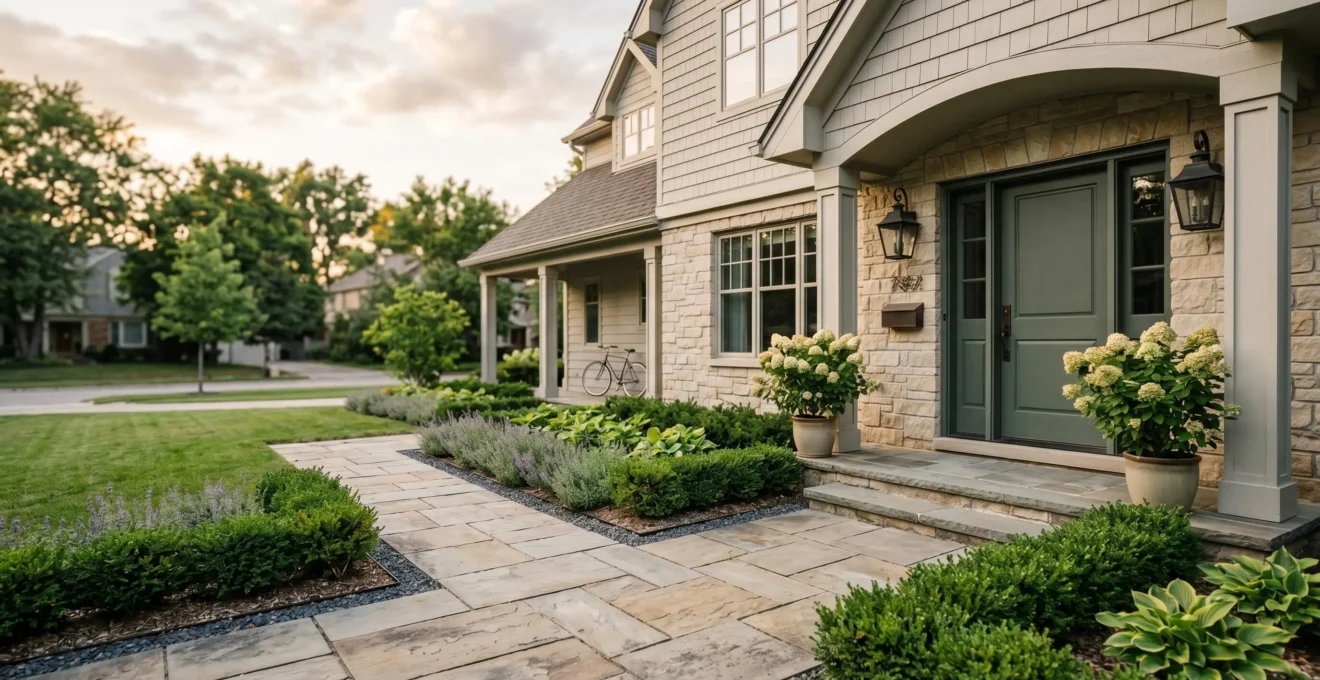
The first point of contact a potential buyer has with your property isn’t the hallway; it’s the view from the street. This ‘kerb appeal’ is the most cost-effective area to generate immediate ROI. A neglected exterior—peeling paint, overgrown weeds, a grimy path—screams a lack of maintenance and signals to buyers that there may be hidden problems elsewhere. It sets a negative tone before they even step inside, mentally preparing them to negotiate down.
Conversely, a smart, well-presented entrance creates an impression of a well-cared-for home, justifying its asking price. This isn’t just about aesthetics; it’s about financial psychology. The colour of your front door alone can have a measurable impact. For example, some studies have shown a blue front door can add a premium of up to £4,000 according to UK property analysis. This is pure renovation arbitrage: a £30 tin of paint for a multi-thousand-pound return.
The strategy extends beyond the door. Upgrading the hardware—a new handle, letterbox, and matching house numbers—costs very little but creates a cohesive, modern look. Clearing weeds, trimming shrubs, and adding a couple of simple potted plants costs next to nothing but transforms the feel of the space. It’s also crucial to consider ‘Digital Kerb Appeal’. Before an estate agent even visits, ensure your property looks its best for the all-important online photos on portals like Rightmove and Zoopla. Clean windows, clear gutters, and a tidy drive are non-negotiable for securing the best first impression online, which is where 99% of buyer journeys begin.
Gaining Planning Permission Without Building: Is It Worth the Paperwork Cost?
One of the most powerful, yet often overlooked, strategies for adding value is creating ‘paper value’. This means securing planning permission for a potential extension, loft conversion, or other significant improvement, but not actually carrying out the work. Why? Because you are selling potential without the risk. You remove a massive element of uncertainty, time, and cost for a future buyer, and they will pay a premium for that certainty.
A buyer looking at two identical houses, one with permission granted for a two-storey rear extension and one without, will always favour the former. They can immediately see the future potential and have a clear, council-approved path to achieving it. This de-risking is incredibly valuable, with analysis showing that gaining planning permission can result in an 11% increase in asking prices on average. On a £400,000 house, that’s a £44,000 uplift for the cost of architectural drawings and a council application, which is typically under £5,000.
This strategy transforms your property from a simple ‘three-bed semi’ into a ‘three-bed semi with approved potential to become a five-bed family home’. In one documented case, a UK owner secured permission and had professional visualisations drawn up. By presenting these designs, they sold the house for £100,000 more than expected in a tough market, proving that buyers pay for a clear vision.
The key is to make the potential tangible. Don’t just hand over a dry approval document. Commissioning high-quality architectural drawings and CGI renders allows buyers to visualise themselves in the expanded space. You are selling a dream, backed by a legal reality. This is the essence of thinking like a developer: leveraging paperwork and strategic planning to create value out of thin air.
Does Improving Your EPC Rating from D to C Increase Resale Value?
An Energy Performance Certificate (EPC) is no longer just a piece of administrative fluff; it’s a direct indicator of a home’s running costs and future-proofing, and buyers are paying close attention. In an era of high energy bills, a good EPC rating is a powerful marketing tool. Moving a property from a ‘D’ to a ‘C’ rating can have a significant impact on its saleability and value, making it one of the most intelligent investments you can make.
The financial incentive is clear. A higher EPC rating means lower bills for the new owner, a benefit they are willing to pay for upfront. Moreover, with increasing government focus on energy efficiency, a poor rating is seen as a liability that will require future investment. Studies have shown up to a 14% increase in value for properties with A or B ratings compared to D-rated homes. While reaching ‘B’ may be costly, the jump from ‘D’ to ‘C’ is often the sweet spot for ROI and is achievable within a £5,000 budget.
The legislative pressure is also a major driver. While a 2025 deadline for landlords was scrapped, the direction of travel is undeniable. As the UK Government’s plans evolve, a ‘C’ rating is becoming the unofficial minimum standard for a desirable, future-proof property. As a policy document from the Labour Party’s housing plans highlights:
Landlords must ensure their rental properties achieve an Energy Performance Certificate (EPC) rating of at least ‘C’ by 1st October 2030.
– UK Government Warm Homes Plan, Labour Party Housing Policy – Minimum Energy Efficiency Standards (MEES)
This makes ‘C’ rated properties far more attractive to the lucrative investor market, widening your pool of potential buyers. Many of the most effective upgrades are surprisingly low-cost, focusing on insulation and draught-proofing rather than expensive new systems.
Action Plan: Cost-Effective EPC Upgrade Checklist
- Replace all traditional bulbs with LED energy-saving bulbs for immediate EPC point gains.
- Install cavity wall and loft insulation to dramatically improve thermal efficiency.
- Add radiator reflector foil behind radiators on external walls to redirect heat back into rooms.
- Implement comprehensive draught-proofing on doors, windows, and letterboxes to plug heat loss points.
- Fit a lagging jacket on your hot water tank and lag exposed pipes to boost heating system efficiency.
Splitting Rooms: When Does Turning a 2-Bed into a 3-Bed Decrease Value?
On paper, adding a bedroom seems like a guaranteed way to add value. Estate agents love to market a ‘three-bed’ over a ‘two-bed’, and data often backs this up, with some analyses suggesting a 5% to 15% value increase for an additional bedroom. This tempts many homeowners into erecting a simple stud wall in a large bedroom to create two small ones. However, this is a classic example of a « developer trap » where the sum of the parts becomes less valuable than the original whole.
Value is not just about the number of rooms; it’s about their usability and the overall flow of the property. The critical mistake is creating two compromised, barely-functional rooms in place of one great one. If splitting a large master bedroom results in two « box rooms » where you can’t fit a double bed and a wardrobe, you have actively destroyed value. Buyers are not stupid; they will see this as a problem they have to pay to fix by removing the wall you just paid to install.
A successful bedroom addition must feel intentional, not forced. Each new room must meet basic standards for size, light, and ventilation to be considered a true bedroom by surveyors and buyers. If you create a bedroom with no window or one that’s only accessible through another bedroom (a ‘tandem’ bedroom), you’ve made a major financial error. Furthermore, consider the target demographic for your property type and area. If you’re in an area popular with young families, sacrificing the only large living room to create a poky third bedroom downstairs can be a disastrous move. They need living space more than they need a tiny, awkwardly placed bedroom.
The 80-Year Trap: Why Extending a Short Lease Instantly Doubles Saleability?
For leasehold properties, the single biggest factor influencing value isn’t the kitchen or the bathroom—it’s the number of years left on the lease. A short lease is a financial time bomb, and many homeowners are unaware they are sitting on one until they try to sell or remortgage. Understanding the « 80-year trap » is critical, as addressing it is often the highest-leverage investment a leaseholder can make.
When a lease drops below 80 years, a legal concept called ‘Marriage Value’ kicks in. In simple terms, this means the cost to extend the lease skyrockets because you now have to pay the freeholder 50% of the value the extension adds to your property. Extending at 81 years is dramatically cheaper than at 79 years. This creates a financial cliff-edge that savvy buyers will use to negotiate huge discounts.
The situation becomes even more dire as the lease shortens. Most mainstream mortgage lenders will refuse to lend on properties with leases below 70-75 years. At this point, your property becomes ‘unmortgageable’. You are instantly restricted to a ‘cash buyers only’ market, which slashes your pool of potential buyers and can decimate the property’s value by 20-30% overnight. This is not a gradual decline; it’s a catastrophic drop in value.
Therefore, extending a lease that is approaching the 80-year mark is a no-brainer. The cost of the extension (often within the £5,000-£10,000 range, depending on the specifics) is almost always far less than the value it preserves and adds. It makes the property mortgageable to the entire market, removes a massive point of negative negotiation, and secures the asset’s value. It can literally double the number of people able to buy your home, and that is a powerful position to be in.
Visualizing Value: How to Identify if a Property Can Accommodate an Extension?
The ultimate goal for many is to add more space, but a full-blown extension is far beyond our £5,000 budget. However, learning to spot the *potential* for an extension is a key developer skill. It allows you to market your property’s future possibilities and even take the first steps towards unlocking that value through ‘paper value’ strategies, as discussed earlier. Before you even think about hiring an architect, you can conduct a powerful ‘desktop survey’ from your own home.
The first step is to act as your own detective. Your local council’s planning portal is a treasure trove of information. Search for planning applications on your street or in the immediate area. If several neighbours with similar properties have successfully been granted permission for loft conversions or rear extensions, it’s a very strong indicator that you will be able to do the same. This is the most reliable predictor of planning success.
As the experts at Planning House state, this initial research is paramount. In their guide, they note:
The first step in maximising the value of your land is to do a development appraisal. This is an assessment of your site’s development potential and should consider factors such as planning policy, local circumstances, planning history, and site-specific issues.
– Planning House, Increasing Land Value Through Planning Permission – Professional Planning Consultancy Guide
Next, look for ‘hidden’ potential within your own property’s footprint. Oversized hallways, underused side returns, or attached garages with single-skin brickwork are all prime candidates for low-cost integration into the main house. A steep ‘A-frame’ roof pitch is a strong visual clue for loft conversion potential, which often falls under permitted development rights, avoiding a full planning application. Finally, think about light and volume. Identifying how you could add a roof lantern or bifold doors in a future extension creates an architectural ‘wow factor’ that adds more perceived value than the raw square footage alone.
Key takeaways
- True value creation comes from strategic, low-cost interventions that offer a high return on investment, not expensive overhauls.
- ‘Paper value’ (like planning permission) and fixing ‘unsexy’ issues (like electrics or damp) often provide a better ROI than cosmetic upgrades.
- Adopting a developer’s mindset means analysing every decision for its financial leverage, not just its aesthetic appeal.
Forced Appreciation: Which Renovation Adds More Equity Than It Costs?
Forced appreciation is the holy grail for any property investor. It’s the art of undertaking a renovation where the value added is significantly greater than the cost of the work. This is ‘renovation arbitrage’. While big-ticket items like kitchens rarely achieve this on a small budget, there are several targeted upgrades that consistently deliver a superb ROI. This often involves identifying a feature that is disproportionately valued by the local market.
Case Study: En-Suite Renovation Arbitrage
Market analysis in a UK suburb revealed that 3-bedroom homes with an en-suite bathroom consistently sold for £30,000 more than identical properties without one. A strategic homeowner identified that their large master bedroom could be partitioned to create an en-suite. The total cost for the work—including plumbing, tiling, fixtures, and the partition wall—was approximately £4,000. By executing this project, the owner manufactured a net equity gain of £26,000, representing a staggering 650% return on their investment. This perfectly demonstrates using hyper-local data to exploit a value gap.
Beyond adding ‘sexy’ features like an en-suite, some of the most profitable renovations are the ‘unsexy’ ones. These are the jobs that don’t make for great Instagram photos but are critical for a smooth sale. They are upgrades that remove a potential buyer’s objection or a surveyor’s red flag. A buyer might use an old fuse box to negotiate £2,000 off the asking price, but you can get it replaced with a modern consumer unit for £500. This is a guaranteed 300% ROI by simply neutralising a problem before it arises.
Other examples include boosting low water pressure, getting a Full Fibre to the Premises (FTTP) internet connection installed, or dealing with a minor damp issue and getting it certified. These jobs prevent a sale from falling through or a last-minute price chip. They protect your asking price, and in the world of property development, money saved is money earned.
Which Renovation Mistakes Kill Your Resale Value Instantly?
Just as some renovations create value, others actively destroy it. Knowing what not to do is just as important as knowing what to do. A value-killing mistake is a project that costs you money to implement and then costs you even more in a reduced sale price or a collapsed sale. These are the unforced errors that turn a profitable project into a financial loss. The most common mistakes often stem from either over-enthusiasm or trying to cut corners.
Hyper-personalisation is a classic error. That bright pink bathroom suite or expensive, bold-patterned tile might be your dream, but it’s a nightmare for a buyer who has to calculate the cost of ripping it out. This forces them to negotiate down. A far smarter approach is to keep permanent fixtures neutral and add personality through easily changeable elements like paint, art, and accessories. Another catastrophic error is over-renovating for your street. Spending £40,000 on a top-of-the-range kitchen in a street where the ceiling price for any property is £250,000 means you will never see that money again. Your property’s value is capped by its location.
However, the most lethal mistakes are those involving regulations and certification. Any work done without the correct paperwork can render a property unmortgageable, instantly killing its value. As the renovation experts at Block Renovation point out, « Skipping permits or code compliance can seem like a shortcut, but it often creates long-term headaches. »
The following table outlines the most common value-killing mistakes and, more importantly, the correct, strategic approach to avoid them. This should be treated as a developer’s core checklist for risk management during any renovation project.
| Mistake | Impact on Value | Correct Approach |
|---|---|---|
| Over-renovating beyond neighborhood ceiling (e.g., £40k kitchen in £250k street) | Zero return or negative—value capped by location comps | Research local sold prices and never spend beyond value justified by neighboring properties; aim for upper-middle specification for the street |
| Work without certification (Gas Safe, FENSA, Part P electrical, Building Control) | Sale grinding halt during conveyancing; forced price reductions of £5k-£15k | Always use certified professionals; retain all certificates in property file; obtain retrospective certification if purchasing property with undocumented work |
| Hyper-personalization (bright pink bathroom suite, expensive bold patterned tiles) | Requires buyer to ‘correct’ immediately; 10-15% negotiation discount typical | Design with personality through easily changeable elements (paint, accessories); keep permanent fixtures neutral with mass-market appeal |
| Removing load-bearing wall without structural engineer calculations and Building Control sign-off | Property becomes unmortgageable—restricts to cash buyers only, decimates value by 20-30% | Always engage a structural engineer for load-bearing alterations; obtain Building Control approval; provide Completion Certificate to future buyers |
By avoiding these pitfalls and focusing on strategic, high-ROI interventions, you can move from being a simple homeowner to a savvy property investor, ensuring every pound spent on your home works as hard as possible to build your equity.
Frequently Asked Questions about Home Value and Leases
What is ‘Marriage Value’ and why does it create a cliff-edge cost at 80 years?
Marriage Value is the additional value created when a lease is extended, calculated as the difference between the value of the flat with the existing short lease and its value with an extended lease. Below 80 years, leaseholders must pay 50% of this Marriage Value to the freeholder, dramatically increasing extension costs. At 81+ years, Marriage Value is assumed to be zero, making extensions significantly cheaper—this creates the strategic ’80-year threshold’ that savvy sellers and buyers navigate carefully.
At what lease length do mainstream mortgage lenders refuse to lend?
Most mainstream mortgage lenders in the UK will refuse to lend on properties with leases below 70-75 years remaining at the point of mortgage application. Some lenders apply even stricter criteria, refusing leases below 80 years. This ‘unmortgageable threshold’ instantly converts the property into a ‘cash buyers only’ proposition, slashing the buyer pool by approximately 85-90% and decimating market value overnight.
Can I sell a property with the ‘right to extend’ already initiated but not completed?
Yes, this is an advanced strategy. A seller can serve the Section 42 notice to formally initiate the lease extension process, locking in the lower valuation date (before further lease depreciation), and then sell the property with this statutory right transferring to the buyer. The buyer inherits the right to complete the extension at the locked-in price, adding significant value without the seller bearing the full upfront extension cost—a strategic middle ground.