Most home renovations lose money. The key to profit isn’t spending more, but spending smarter on what the local market actually values, not on personal taste.
- Over-capitalising on a high-spec kitchen in a mid-range area can halve your return on investment compared to a minor, targeted refresh.
- Layout flaws like a poorly placed downstairs bathroom can shrink your pool of potential buyers, forcing price reductions.
- Curb appeal offers the highest ROI, with simple jobs like painting a front door adding thousands to the final sale price.
Recommendation: Stop guessing. Use comparable sales data and an objective understanding of buyer psychology to guide every renovation decision.
Every homeowner embarking on a renovation project dreams of the finished product: the gleaming new kitchen, the spa-like bathroom, the perfect living space. There’s a pervasive belief, fuelled by home improvement shows, that every pound spent on renovation will be returned, with profit, at the point of sale. Many will tell you that « kitchens and bathrooms sell houses » or that you have to « spend money to make money ». As an estate agent valuer, I see the painful reality of this myth every single day.
The hard truth is that the market doesn’t care about your personal taste or your dream kitchen. It operates on cold, hard data: comparable local sales, buyer demand, and the maximum price a property can achieve on a given street—its ‘ceiling price’. Many well-intentioned renovations are, from a financial perspective, nothing more than acts of value destruction. They are exercises in over-capitalisation, where money is spent that will never be recouped because the local market simply won’t support it.
This article is not another design guide filled with fleeting trends. Think of it as a valuation report for your renovation plans. We will dissect the most common and costly mistakes that kill resale value, not from the perspective of an interior designer, but from the viewpoint of the market. We will analyse the data on what buyers actually pay for, why some ‘upgrades’ actively deter them, and how to make strategic choices that deliver a quantifiable return on investment.
This guide will walk you through the critical financial decisions behind home improvements. We will explore the data on kitchens, bathrooms, garden spaces, and paint colours, revealing the often-surprising gap between perceived value and actual market return. Let’s begin.
Summary: Unpacking the Real Costs of Renovation Blunders
- The Danger of Installing a £20k Kitchen in a £150k House
- Downstairs Bathroom: Why This Layout Flaw Reduces Buyers by 40%?
- Paving vs Grass: What Do Families Actually Look for in a Garden?
- Magnolia vs Grey: Which Paint Colour Sells Houses Faster in 2024?
- Do Buyers Actually Pay More for Smart Heating and Lighting Systems?
- The Front Door ROI: Why Painting and Weeding Adds Instant Value?
- When to Refurbish: Is It Better to Patch Up or Fully Renovate Between Tenants?
- Why Estate Agents Overvalue Your Home and How to Find the Real Price?
The Danger of Installing a £20k Kitchen in a £150k House
The single most common mistake I see is over-capitalisation, and the kitchen is the primary crime scene. A homeowner might install a top-of-the-line £20,000 kitchen in a property with a market ceiling of £150,000, assuming they’ve added £20,000 of value. They have not. They have, at best, made the property more saleable, but they will not recoup their full investment. The data is clear: market context is everything. While a minor, cosmetic kitchen remodel can yield a 96% return, a major, high-end overhaul in the wrong property often returns less than 50%.
The problem is that a house’s value is ultimately determined by comparable sales in the immediate area. A professional appraiser won’t value your home higher just because it has a quartz-stone worktop if the house next door with a laminate top sold for £150,000 last month. As a rule of thumb, your kitchen’s total cost should not exceed 10-15% of your home’s total value. Anything more is likely money you will never see again. The goal is to meet the market’s expectation for a property of that type and price, not to drastically exceed it.
Case Study: The Over-Improvement Trap
Professional appraiser Richard Newburg warns against this exact scenario. He explains that neighbourhoods are tiered. As he stated in an interview with This Old House, putting more money into a home than the house and the block can support is a common and costly mistake. The property’s value is fundamentally capped by recent, local sales, regardless of how superior your renovation might be. Your £20k kitchen doesn’t change the school catchment area or the local transport links, which are the real drivers of value.
Downstairs Bathroom: Why This Layout Flaw Reduces Buyers by 40%?
Layout is a fundamental aspect of a property’s appeal, and some ‘quirks’ are more damaging than others. A downstairs bathroom, particularly if it’s the only one in the house, is a prime example of a layout flaw that can drastically shrink your buyer pool. While the 40% figure is an industry rule-of-thumb based on agent experience, the logic is sound: you immediately alienate key demographics. Families with young children, elderly buyers, and anyone with mobility issues will often dismiss a property with this layout out of hand. They won’t even book a viewing.
The issue is one of practicality and convention. Buyers expect bedrooms and bathrooms to be located on the same floor. A downstairs bathroom often means an inconvenient and potentially hazardous trip in the middle of the night. Furthermore, it often comes at the expense of valuable ground-floor living space, such as a utility room or an extension of the kitchen. While adding a downstairs W.C. can be a value-add, replacing the main family bathroom with a downstairs-only facility is almost always a financial misstep.
Market research consistently shows that buyers favour conventional layouts. For instance, recent data shows over 65% of homeowners prefer a standard bathroom design with a separate enclosed shower, indicating a preference for traditional, functional spaces. An unconventional layout like a downstairs-only bathroom moves the property from mainstream to niche, and niche markets always have fewer buyers. Fewer buyers means less competition, which ultimately translates to a lower selling price or a much longer time on the market.
Paving vs Grass: What Do Families Actually Look for in a Garden?
The trend for low-maintenance, fully paved or decked gardens is one of the most financially damaging you can follow. While it may seem like a practical solution, you are trading a highly desirable asset for a sterile, often less-usable space. From a valuer’s perspective, a green, turfed area is not just grass; it’s potential. It’s a space for children to play, for entertaining, for a future buyer to imagine their life. Paving over it removes that potential. The numbers bear this out: property valuation experts report that a well-designed garden can increase property value by up to 28%, while a neglected or poorly conceived one can actively decrease it.
The key buyer demographic, families, overwhelmingly prioritises a lawn. A study found that 70% of homebuyers would pay more for a home with a dedicated green space. By paving your garden, you are telling this large, motivated segment of the market that your home is not for them. You’ve installed a permanent barrier to their interest.
However, this doesn’t mean you need a garden that requires professional-level upkeep. The key is finding a balance. A recent analysis found that basic landscape maintenance—mowing, planting perennials, mulching—delivered at least 100% cost recovery. The most appealing gardens are those that are well-maintained and offer a balance of lawn, a simple patio for seating, and neat, manageable borders. Elaborate, high-maintenance gardens can be just as off-putting as a sea of concrete, as buyers fear the time and cost of upkeep. The sweet spot is a clean, green, and simple canvas.
Magnolia vs Grey: Which Paint Colour Sells Houses Faster in 2024?
Paint is the cheapest and most effective tool for transforming a property’s appeal, yet it’s where personal taste can be most destructive to value. That bold feature wall or vibrant colour scheme might be your pride and joy, but to a potential buyer, it’s just another job that needs doing. Every unconventional colour is a barrier to purchase, forcing buyers to mentally calculate the cost and effort of repainting. In a competitive market, they will simply move on to the next property that offers a neutral canvas.
The « safe » choice has long been Magnolia, but the market has moved on. Today, shades of light grey and off-white offer a more contemporary neutral backdrop that allows buyers to envision their own furniture and lives in the space. However, data suggests being even more strategic can pay dividends. According to Zillow’s comprehensive paint study, choosing the right colour can impact the sale price by thousands, with a light blue bathroom, for example, adding a significant premium.
This table, based on recent market analysis, breaks down the colours that are currently performing best at sale. It’s not about what’s fashionable, but what is statistically proven to appeal to the broadest range of buyers and achieve the highest price.
| Room Type | Top Performing Color | Average Value Increase | Colors to Avoid |
|---|---|---|---|
| Kitchen | Charcoal Gray / Olive Green | $2,400-$2,512 | Off-white / Eggshell (sold below market) |
| Living Room | Blue Hues / Gray | $1,700 | Terracotta (sold below expected value) |
| Bathroom | Light Blue / Mid-tone Brown | 1.6% ($5,000 on $290k home) | Bright reds, greens, pink |
| Front Door | Black | $6,449 | Midtone cement colors |
| Exterior | White / Gray / Beige | Fastest sale velocity | Bright rainbow colors |
Do Buyers Actually Pay More for Smart Heating and Lighting Systems?
The marketing for smart home technology promises a futuristic, high-value home. The reality on the ground is far more nuanced. While certain smart technologies are becoming expected, many complex or proprietary systems are viewed by buyers as a liability, not an asset. A potential buyer doesn’t want to inherit a complex web of apps, subscriptions, and potentially obsolete hardware that they don’t understand and can’t easily service.
The key to adding value with smart tech is to focus on simplicity, universal compatibility, and clear financial benefits. A smart thermostat from a well-known brand like Nest or Hive is a clear win because it has a proven track record of reducing energy bills. This is a tangible benefit you can sell. A custom-programmed lighting system that only works with one obscure app is a liability. Buyers fear being locked into a specific brand or being left with a « dumb » house if the company goes out of business.
As one market analysis bluntly puts it, the approach should be cautious and consumer-focused.
Buyers are wary of complex, custom systems that will be obsolete in 3 years or lock them into one brand. The highest value lies in simple, universally compatible systems from trusted brands.
– Property Technology Market Analysis, Smart Home Buyer Preference Research 2024
Therefore, if you are going to invest in smart technology, it must solve a problem for the new owner, not create one. Focus on energy savings, security (smart locks, cameras), and convenience that works with major platforms like Google Home, Amazon Alexa, or Apple HomeKit. Anything that requires a manual, a subscription, or a specialist to operate is likely to detract from your home’s value, not add to it.
The Front Door ROI: Why Painting and Weeding Adds Instant Value?
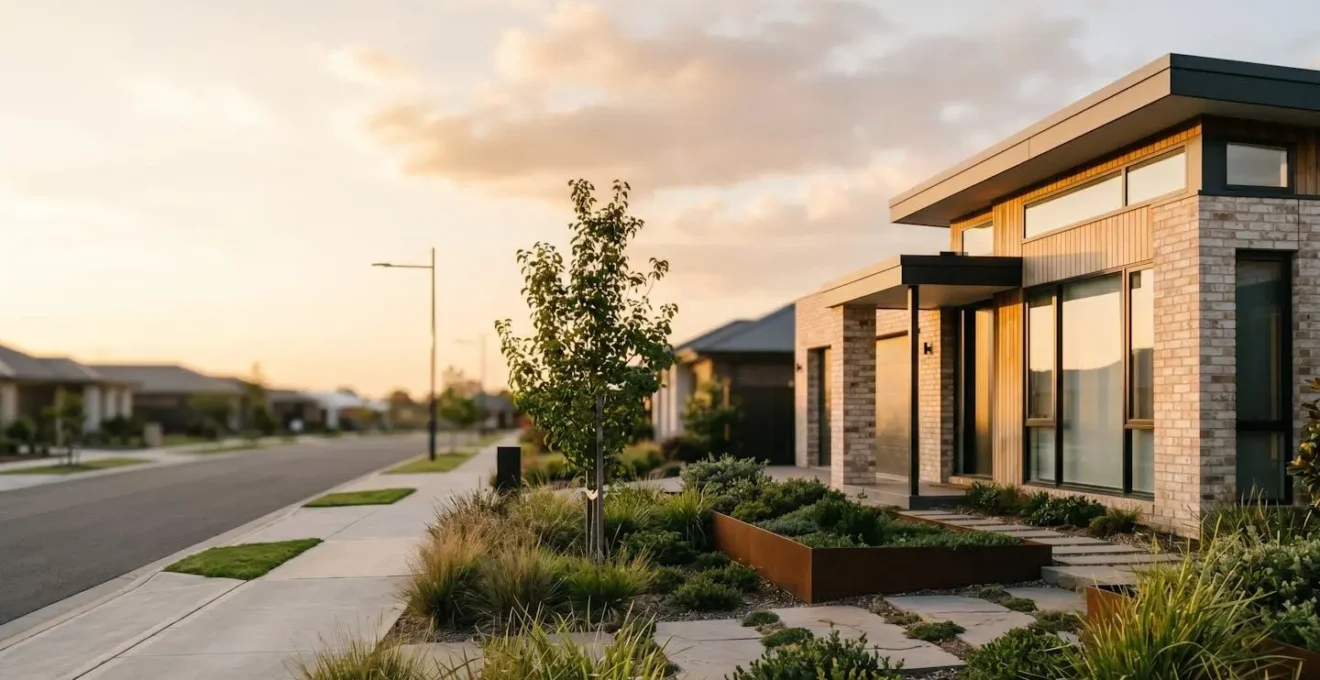
If there’s one area that offers an almost unbelievable return on investment, it’s curb appeal. The front of your property is the very first thing a buyer—and their estate agent—sees. It forms the valuation anchor, the critical first impression that sets the tone for the entire viewing and influences the perception of value before they’ve even stepped inside. A shabby exterior suggests a poorly maintained interior, leading buyers to look for problems and agents to start their valuation on the back foot.
Conversely, a smart, clean, and welcoming entrance creates a halo effect. It signals care, quality, and attention to detail. The costs are minimal: a tin of paint, new door furniture, a couple of planters, and a few hours of weeding. Yet the returns are disproportionately high. As the paint colour table showed, a black front door can add over £6,000 to offers. The data for exterior finishes is even more stark; a cost vs. value analysis revealed that manufactured stone veneer achieved an incredible 153.2% ROI in 2024. This demonstrates the market’s willingness to pay a premium for a great first impression.
Your goal is to create an entrance that looks fantastic in the main listing photograph. This « hero shot » is what will make buyers click for more details. Simple, high-impact tasks should be your focus:
- Paint the front door in a smart, high-performing colour (black, dark grey, or deep blue).
- Update house numbers, the letterbox, and the doorbell to a modern, coordinating style.
- Ensure paths are clean and weed-free.
- Add symmetrical potted plants or hanging baskets for a touch of life and colour.
- Ensure any grass is neatly mown and edges are sharp.
When to Refurbish: Is It Better to Patch Up or Fully Renovate Between Tenants?
For landlords and property investors, the renovation equation is different but no less critical. The goal is not to attract a single emotional buyer, but to maximise rental yield and minimise void periods over the long term. This requires a shift in mindset from « desirable » to « durable ». While a well-managed flip can earn an average ROI of 30.4%, rental renovations are about long-term performance, not a one-off profit.
The biggest mistake landlords make is underestimating the true cost of a renovation, which must include the opportunity cost of lost rent during the works. A detailed financial analysis showed that a £10,000 renovation that adds £100 per month in rent but causes two months of vacancy actually takes over 10 years to break even. Each vacant month is lost income that can never be recovered, dramatically extending the true payback period. Therefore, a full renovation between tenants should only be undertaken if the property is in such a state that it is unlettable, or if the works will facilitate a significant, immediate jump in rental income that justifies the void period.
For most situations, a « patch up and refresh » approach is more profitable. This means focusing on durable, easy-to-clean, and easy-to-replace materials. The choice of materials should be ruthlessly practical, as shown below.
| Property Element | Premium Option (Desirable) | Rental-Optimized Option (Durable) | Durability Advantage |
|---|---|---|---|
| Flooring | Hardwood | Luxury Vinyl Tile (LVT) | Waterproof, scratch-resistant, 1/3 cost |
| Countertops | Marble | Quartz | Non-porous, stain-proof, low maintenance |
| Wall Paint Finish | Matte | Semi-gloss / Eggshell | Washable, hides wear, resists marks |
| Cabinetry | Real wood doors | Thermofoil / Laminate | Moisture-resistant, easy to clean |
| Bathroom Fixtures | High-design specialty | Mid-range standard sizes | Universal replacement parts available |
Key takeaways
- Exceeding the neighbourhood’s value ceiling through over-capitalisation is the fastest way to lose money on a renovation.
- Layout flaws and niche personal tastes shrink your buyer pool, leading to lower offers and longer marketing times.
- Focusing on low-cost, high-impact curb appeal provides the single greatest return on investment in property renovation.
Why Estate Agents Overvalue Your Home and How to Find the Real Price?
After carefully renovating your home for profit, the final hurdle is determining its true market value. This is where many sellers fall into the last trap: believing the highest valuation offered by an estate agent. It’s a common tactic known as ‘buying the listing’, where an agent will deliberately overvalue a property to win the instruction, locking the seller into a lengthy contract. The agent knows the price is unachievable and will inevitably pressure the seller into a price reduction weeks later, once they are committed.
The true value of your home is not a matter of opinion; it is what a willing and able buyer is prepared to pay for it in the current market. Finding this price requires a data-driven, objective approach, not wishful thinking. You must become your own analyst, triangulating information from multiple sources to cut through the sales talk and arrive at a realistic figure. This means rejecting the most flattering valuation and instead focusing on hard evidence.
A property’s value is anchored by what has recently sold nearby. Your renovation, however beautiful, will not fundamentally change the market price of your postcode. To find the real price, you must remove emotion and follow a clear audit process. This ensures you are pricing your property to sell efficiently at the best possible price the market will bear.
Your Action Plan: The Triangulation Method for True Market Value
- Contact Points: Obtain valuations from at least three different local estate agents. Immediately be sceptical of the highest valuation, especially if it is not supported by strong evidence.
- Data Collection: Conduct your own deep analysis of recently SOLD properties (not ‘for sale’ or ‘under offer’ prices) within a 0.5-mile radius using official Land Registry data. Compare properties of similar size, age, and condition.
- Coherence Check: For ultimate clarity, consider paying for an independent RICS (Royal Institution of Chartered Surveyors) pre-sale appraisal. This unbiased, professional valuation (£300-£600) serves as a powerful reality check against agent valuations.
- ROI Reality Check: Use the 10-15% rule as a sanity check. Does your kitchen’s cost fall within 10-15% of the total estimated property value? If not, you may have over-capitalised, and this must be factored into your asking price.
- Evidence Integration: Demand that each agent provide you with a written list of the comparable properties (CMAs) they used to justify their valuation. A legitimate agent will have a data-backed rationale; an agent ‘buying the listing’ will be vague.
Stop thinking like a homeowner and start acting like an investor. Apply this data-driven valuation mindset to your next property project to protect your equity and maximize your return.